Requirement Review
Drawing, CAD model, sample, application, quantity, quality, and validation inputs.
Lemeng reviews tooling, CNC support, solid and liquid silicone molding, overmolding, injection support, secondary operations, inspection, and production planning against the approved project requirements.
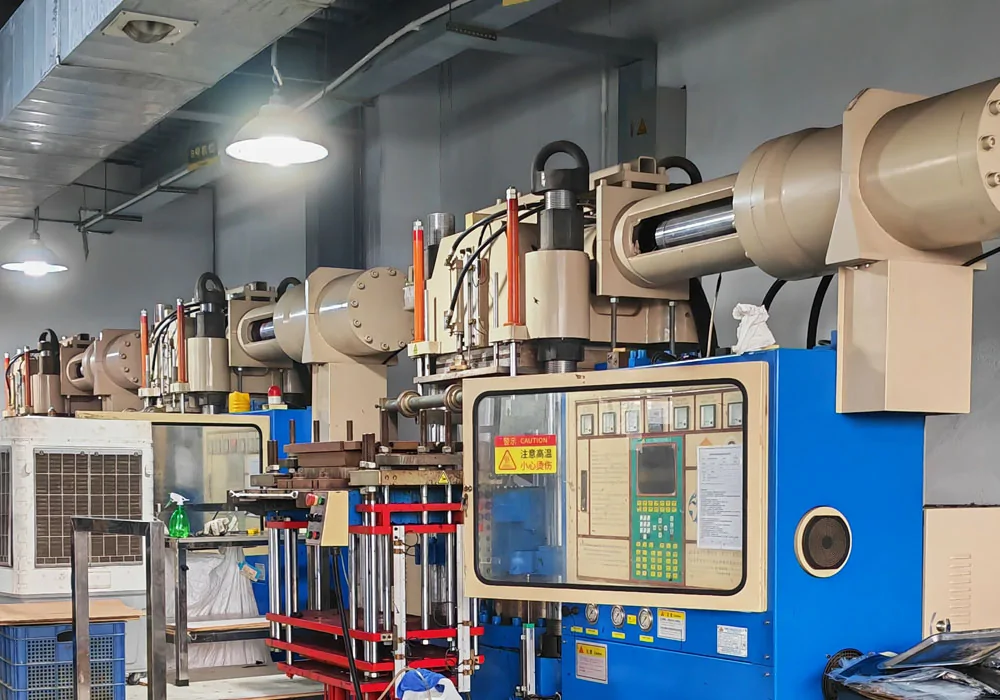
Capability fit is evaluated from the product or component design, material form, geometry, quantity, quality criteria, validation scope, secondary operations, and supply requirements.
The selected route connects engineering review, tooling, material preparation, molding, inspection, documentation, and controlled release. Individual steps expand or contract according to the approved project.
The final route is defined from the approved project inputs, material, geometry, tooling, quality, validation, and production requirements.
Drawing, CAD model, sample, application, quantity, quality, and validation inputs.
Mold concept, CNC support, trial plan, revision control, and production release.
Material form, performance context, preparation, evidence, and change control.
Compression, LSR, insert, overmolding, or connected process evaluation.
Secondary operations, samples, testing, inspection, assembly, and packaging.
Approved production, records, traceability, final inspection, and shipment release.
Verified Views from the Manufacturing Floor
Approved photographs document the production environment, installed molding equipment, in-process inspection, and workshop organization. Individual manufacturing routes remain subject to project review.
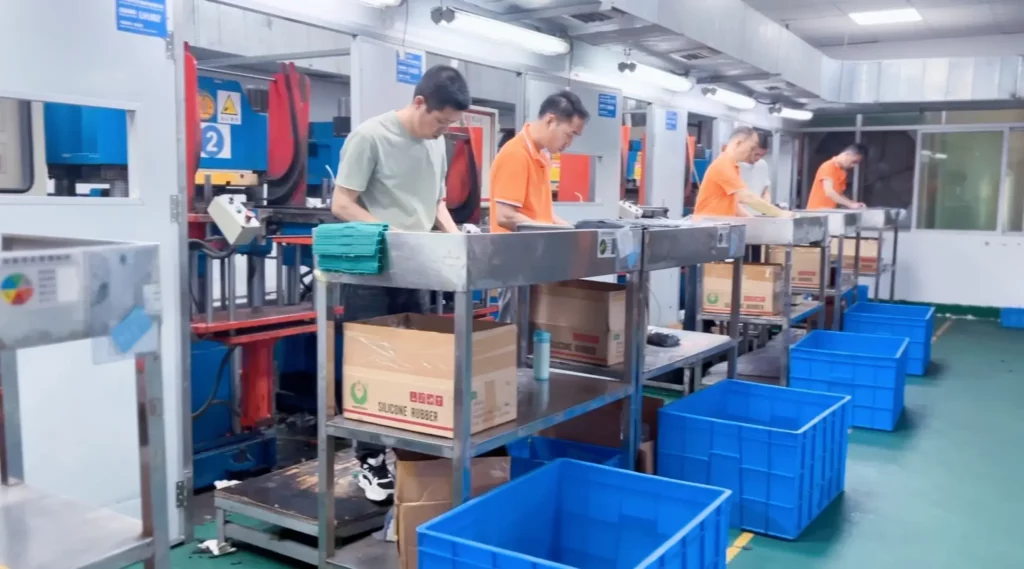 Production Equipment
 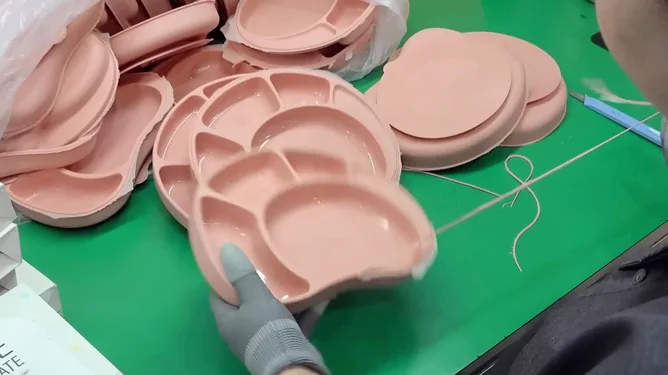 Inspection
 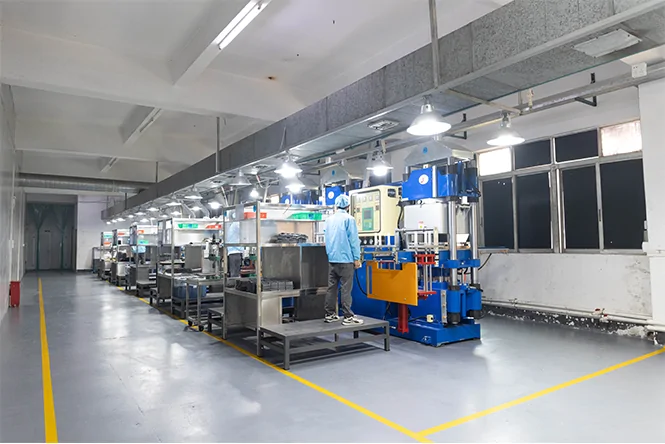 Workshop
 Public capability statements are tied to project inputs and approved evidence rather than unsupported machine counts or universal material claims.
| Material Family | Selection Context | Evidence Note |
|---|---|---|
| Solid Silicone Compounds | Reviewed against geometry, hardness or performance target, color, operating environment, molding route, and evidence needs. | Project-specific material documents and approved samples. |
| Liquid Silicone Rubber Systems | Reviewed for liquid delivery, flow, geometry, tooling, process control, volume, quality, and validation requirements. | Material system and documentation confirmed per project. |
| Substrates and Inserts | Reviewed for interface geometry, retention, preparation, material compatibility, sequence, handling, and functional validation. | Substrate data, samples, and approved interface evidence. |
Only controls approved for public use are displayed. Project-specific methods, records, tests, and release requirements are confirmed during technical review.
Material identity, available records, storage, preparation, and project approval status.
Tool identity, revision, setup, trial status, maintenance, and release readiness.
Dimensions, appearance, function, material context, and required project validation.
Start-up, in-process controls, critical characteristics, nonconformance, and change control.
Final inspection, traceability, documentation, packaging, and shipment approval.
Application fit is confirmed from the design, operating conditions, material, quality criteria, validation, and target-market requirements.
Use, cleaning, material, branding, packaging, target-market, and project-specific testing requirements.
Drawing, critical geometry, operating conditions, tolerances, interface, inspection, and validation requirements.
Substrate, interface, retention, compatible materials, molding sequence, function, and assembly controls.
Existing tooling or sample status, approved specification, change control, validation, production records, and supply requirements.
Answers are scoped to project review and do not replace an approved drawing, specification, quality plan, or quotation.
Depending on the material form, geometry, quantity, component interfaces, quality requirements, and production objective, a project may be reviewed for compression molding, liquid silicone rubber molding, insert molding, or silicone overmolding. The final route is confirmed after engineering review.
The decision considers material form, part geometry, wall sections, flash and surface requirements, tooling concept, target volume, automation potential, inspection needs, validation scope, and total project objectives. Neither process is automatically better for every part.
Tooling and CNC support can be integrated for mold design, manufacturing, trial, revision, maintenance, and production release. The exact scope, ownership, construction, timing, and evidence must be defined in the quotation and project documentation.
Useful inputs include a drawing, CAD model or sample, application and operating conditions, material expectations, dimensions and critical features, target quantity, quality and validation requirements, secondary operations, packaging, and the desired project schedule.
Quality controls are defined for the approved project and may cover incoming material, tooling status, sample approval, process settings, in-process inspection, final inspection, testing, traceability, packaging, documentation, and change control.
Capability fit can be evaluated for consumer product categories and engineered industrial components. The appropriate process, material, evidence, quality plan, documentation, and validation route depend on the individual application.
Share the available drawing, CAD model, sample, application, quantity, material expectations, quality criteria, validation needs, and target schedule for an initial capability review.
Suggested project files: PDF, CAD export, drawing, specification, or reference image. Current server upload limit: 100 MB. Final file rules are controlled by the form configuration.
By submitting project information, you acknowledge that Guangdong Huayang Industrial Co., Ltd. processes the RFQ data as described in the Privacy Policy.