Travel & Personal Care
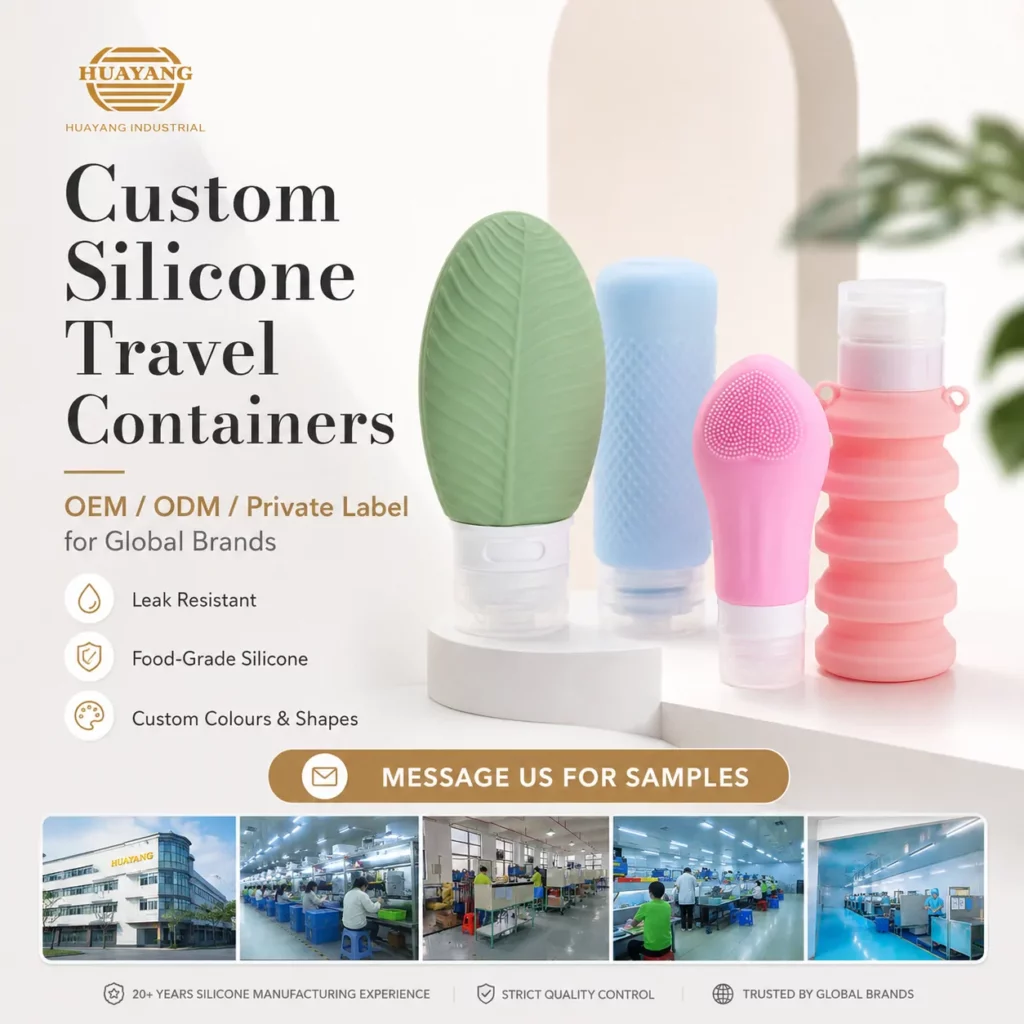
Portable containers, refillable formats, toiletry accessories, compact tools, and packaging programs reviewed around travel and personal-care use.
Review related product routesLemeng develops custom silicone daily-use products for brands, private-label programs, distributors, and product teams. Projects can progress from requirement review and tooling through sampling, controlled molding, inspection, packaging coordination, and mass-production support.
Start with the real use condition rather than an SKU list. The application determines which structure, material, molding route, testing support, packaging, and approval criteria need review.
Portable containers, refillable formats, toiletry accessories, compact tools, and packaging programs reviewed around travel and personal-care use.
Review related product routesCollapsible or protective bottle-related concepts reviewed for capacity, closure, grip, cleaning, storage, and target-market requirements.
Review related product routesMats, pads, grips, surface-protection products, and small household tools reviewed for contact surface, load, cleaning, and repeated use.
Review related product routesProtective covers, gloves, sleeves, feet pads, and anti-slip components reviewed for fit, heat, abrasion, flexibility, and installation.
Review related product routesThe categories below define development routes for OEM/ODM projects. Each final product is quoted against its own drawing, sample, use environment, target market, volume, and evidence requirements.
Portable bottle and container projects with custom shape, size, closure, color, logo, set configuration, and packaging review.
Hydration-related concepts reviewed for capacity, closure structure, handling, cleaning, storage, material, and validation needs.
Household, counter, work-surface, draining, anti-slip, and protective mat applications developed around dimensions, texture, contact, and cleaning conditions.
Covers, sleeves, guards, bumpers, and protective forms reviewed for fit, impact, abrasion, temperature, and assembly requirements.
Handling and heat-contact glove concepts reviewed for grip, flexibility, thickness, sizing, surface texture, cleaning, and use conditions.
Anti-slip, cushioning, support, and surface-protection pads reviewed for dimensions, hardness, adhesion or installation, load, and wear conditions.
Compact household and personal-use tools developed from a sample, drawing, product idea, or functional specification.
Customization is coordinated as one development system, connecting structure, tooling, material, appearance, branding, packaging, validation, and production release.
Explore Custom ManufacturingReview dimensions, wall sections, ribs, textures, openings, closures, interfaces, grip, drainage, and functional geometry.
Define color reference, surface texture, gloss, translucency, tactile requirements, and acceptable appearance standard.
Review molded, debossed, embossed, printed, or other project-appropriate brand identification routes.
Align individual packaging, sets, inserts, labels, cartons, barcodes, instructions, and shipping protection with the program.
Move approved geometry through DFM, tooling route, sample review, corrections, validation, and controlled production release.
Material selection begins with the application, contact conditions, temperature, cleaning method, mechanical load, target market, color, and testing plan.
| Requirement | Evaluation | Support |
|---|---|---|
| Application and Contact | Review what the product contacts, how long contact occurs, cleaning method, storage, and user environment. | Material and documentation route defined against confirmed use conditions. |
| Mechanical Performance | Review flexibility, hardness, compression, grip, sealing, recovery, load, wear, and assembly needs. | Sample and validation criteria coordinated with the approved specification. |
| Temperature and Cleaning | Review expected temperature range, heating or cooling exposure, detergents, sterilization requests, and repeated cleaning. | Testing or evidence requirements coordinated where specified by the customer. |
| Color and Appearance | Review color reference, translucency, finish, texture, marking, and acceptable visual standard. | Approved color and appearance sample used as a production reference. |
| Target-Market Evidence | Review market, application, customer specification, requested test method, and documentation scope. | Testing and document coordination is project-specific and subject to confirmation. |
A controlled route converts commercial and technical inputs into an approved sample, documented production standard, and repeatable manufacturing process.
Confirm the application, drawing or sample, use conditions, target market, volume, branding, packaging, and timing.
Review geometry, DFM, material direction, molding route, assembly, validation, and risk points.
Develop tooling against the approved design and manufacturing route, with revision control for project changes.
Produce samples for structure, fit, function, color, appearance, packaging, and agreed evidence review.
Close review comments and confirm the approved sample, drawing, inspection criteria, documentation, and production standard.
Run controlled molding, secondary operations, inspection, packaging, release, and shipment coordination.
These presentation assets show available travel and personal-care container directions. They support initial project discussion; final specifications, claims, branding, testing, and packaging require project confirmation.
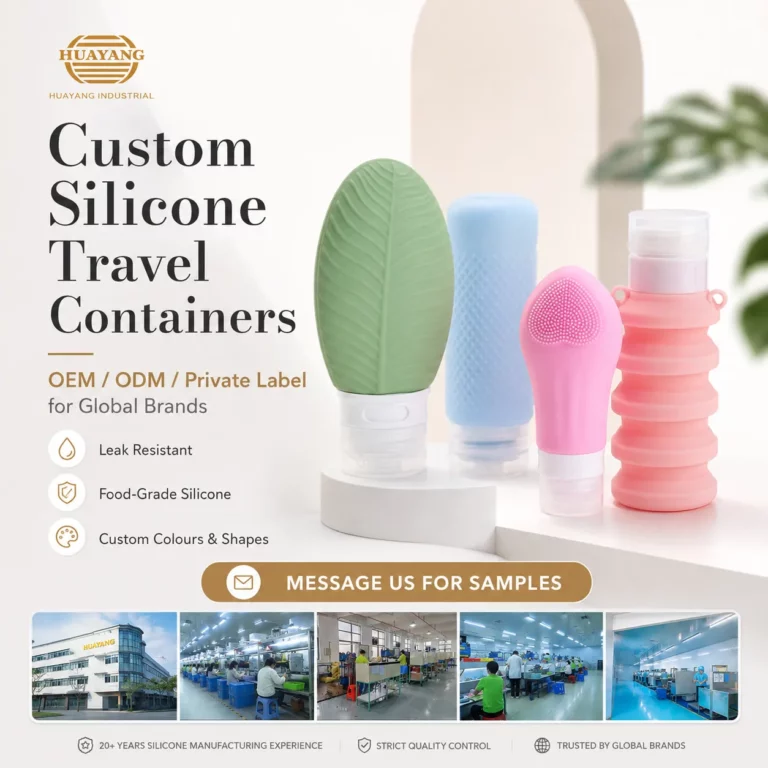
Travel-container sample range for OEM/ODM project discussion.
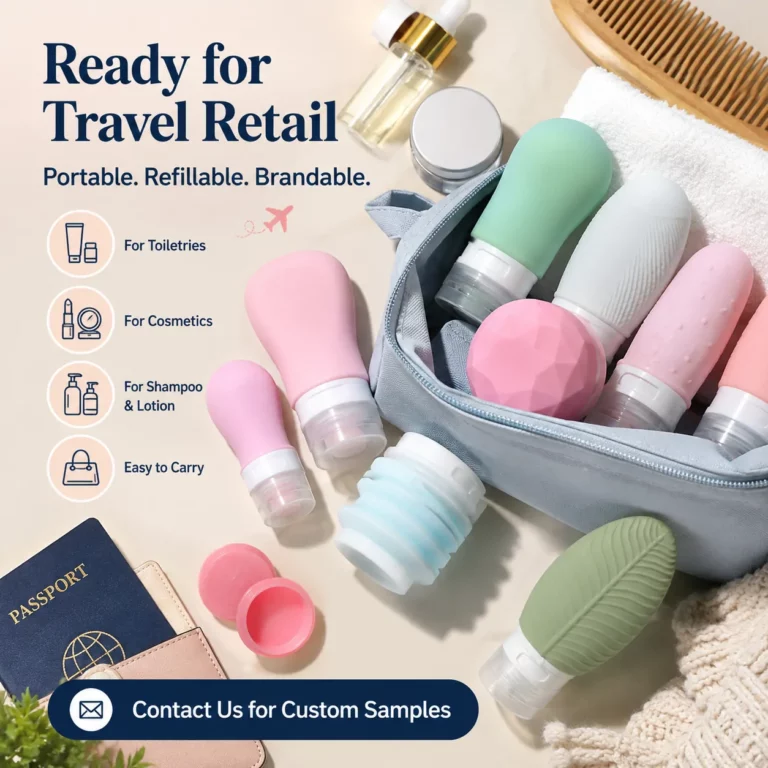
Retail-set reference for container, color, branding, and packaging review.
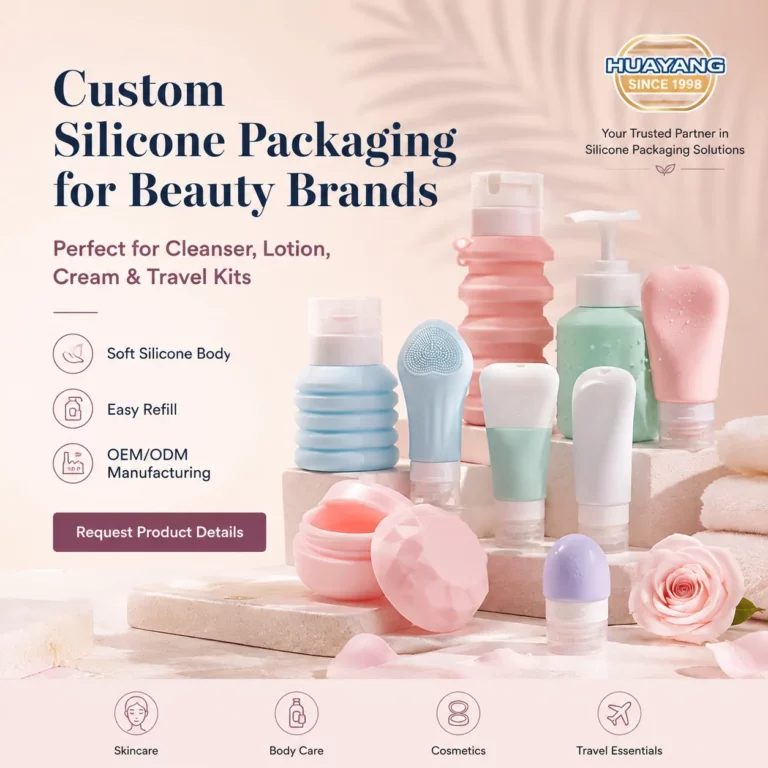
Packaging reference for private-label travel and personal-care programs.
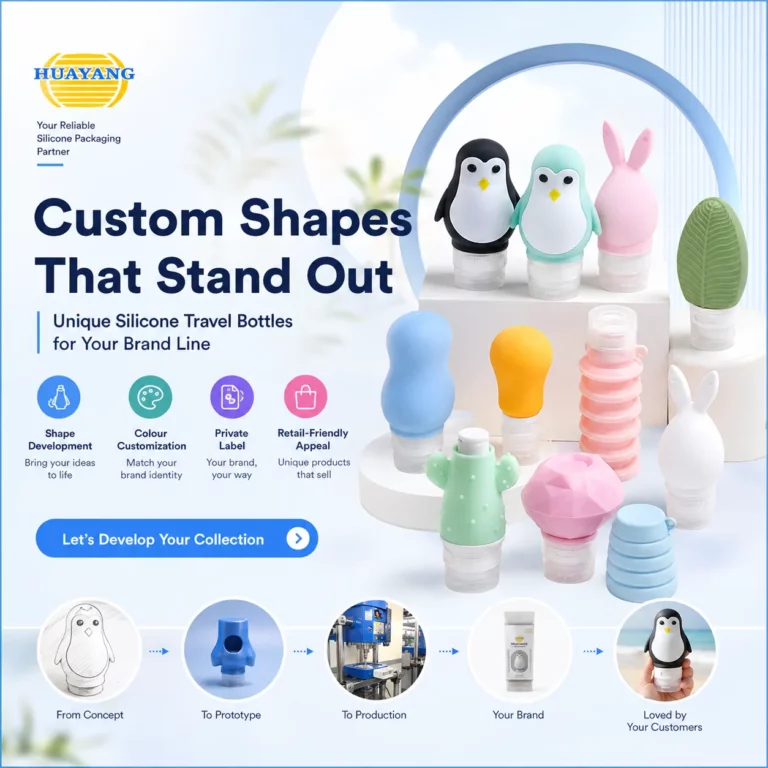
Shape and color references for custom silicone container development.
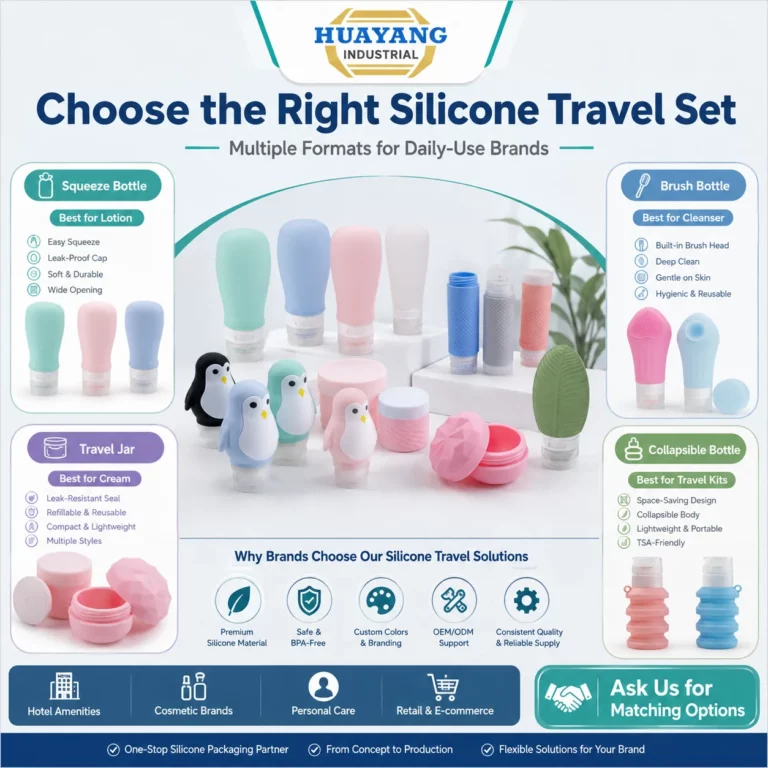
Format-selection reference for daily-use and travel product programs.
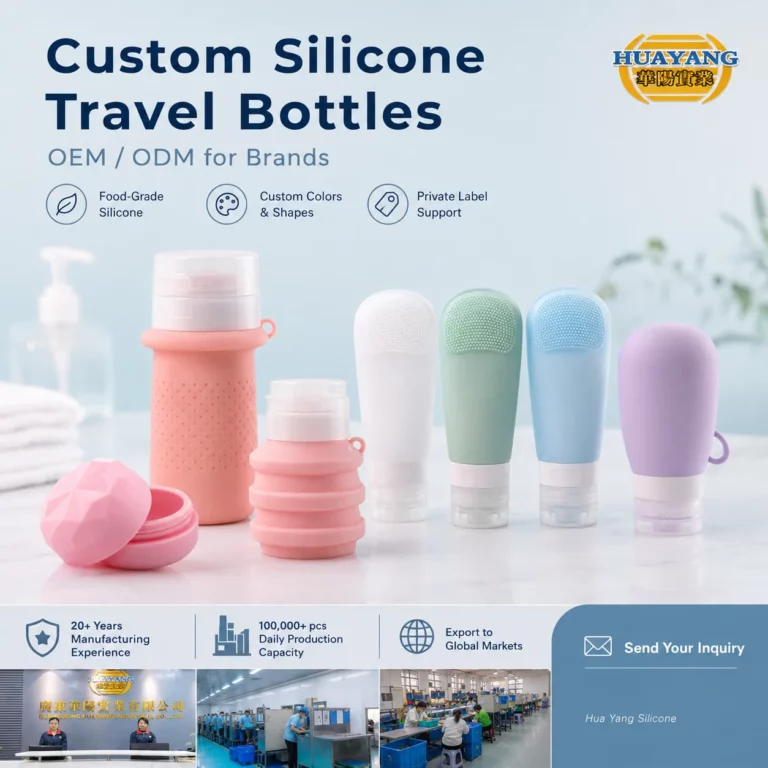
Color and format samples for OEM/ODM travel bottle evaluation.
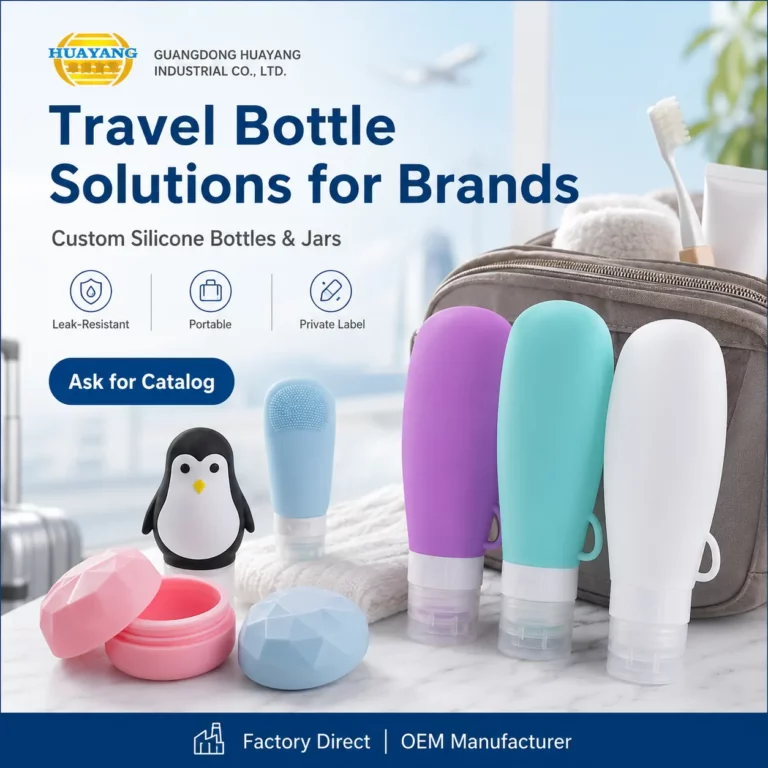
Travel bottle sample direction for branded product programs.
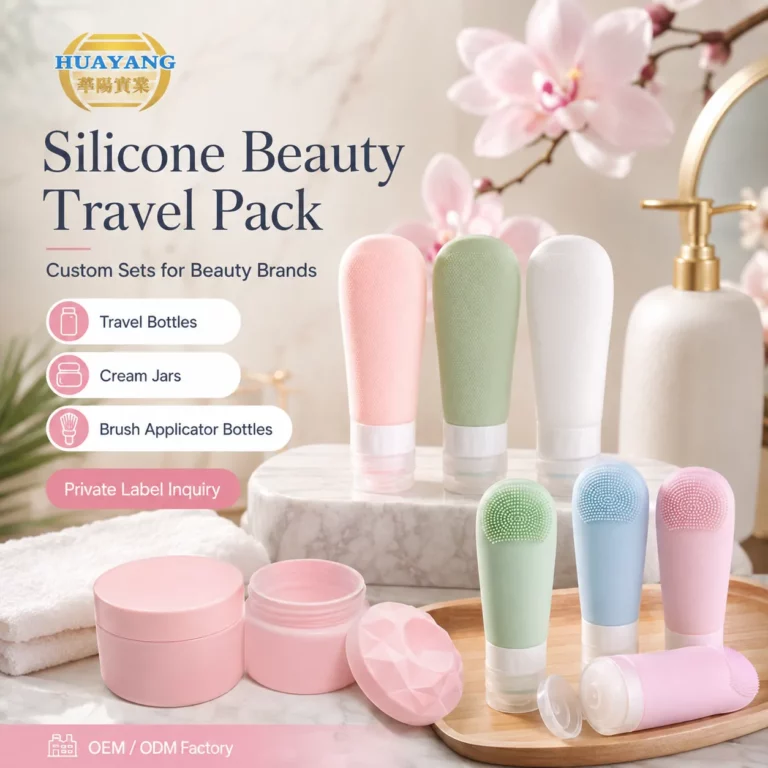
Personal-care travel pack reference for product and packaging review.
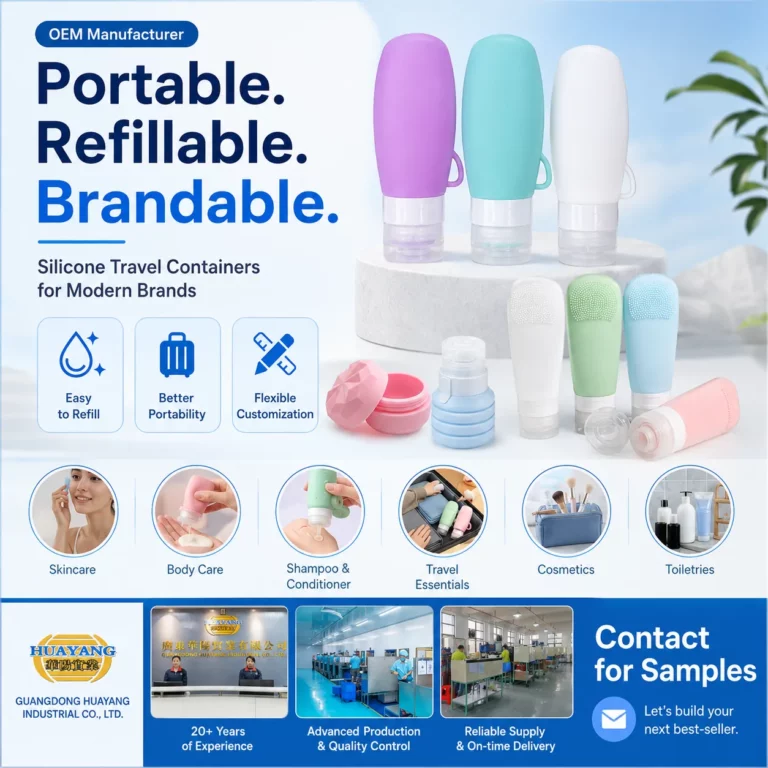
Portable container range for application and brand-program discussion.
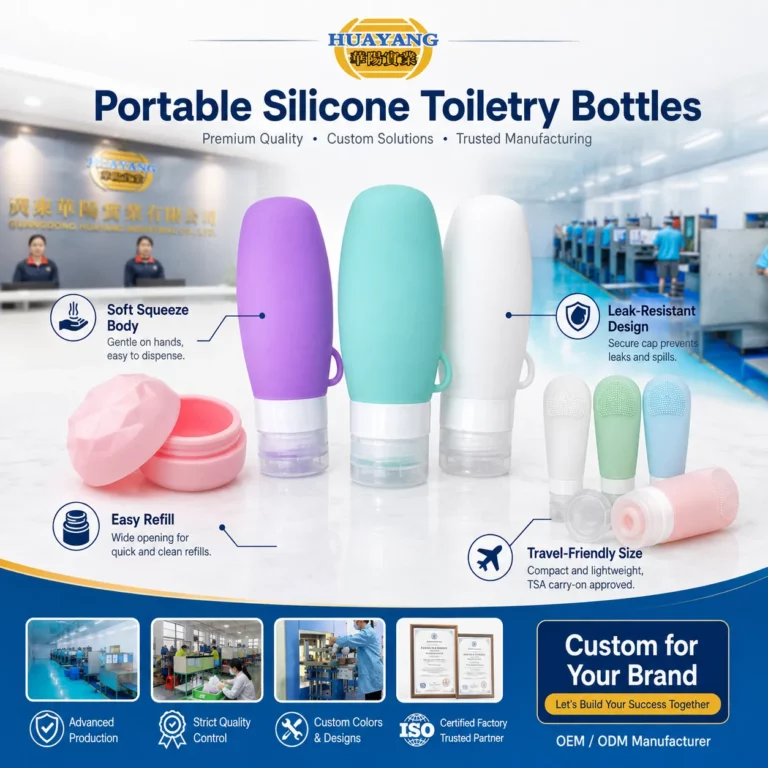
Toiletry bottle reference for size, color, closure, and logo review.
Quality planning follows the approved material, drawing, color standard, sample, inspection criteria, packaging specification, and documentation route defined for the project.
Review Quality & ComplianceCheck approved material references, supplier documents, batch identification, storage, and issue controls.
Confirm the approved geometry, sample, color, surface, fit, function, and revision status before release.
Monitor the defined molding and secondary-operation controls against the released production route.
Apply project-defined incoming, in-process, and final inspection criteria with appropriate records.
Review agreed inspection, testing, packaging, traceability, and release documentation before shipment.
Final requirements remain subject to application, engineering, material, quality, testing, documentation, and commercial review.
Yes. A project can begin with a drawing, CAD file, physical sample, specification, or product concept. The team reviews geometry, use conditions, material direction, tooling, process, validation, quantity, and evidence requirements before confirming the manufacturing route.
Development routes include silicone travel bottles, water-bottle concepts, mats, protective products, gloves, feet pads, and small daily-use tools. Final feasibility and specifications are confirmed for each project.
Yes. Support can include requirement review, structural development, mold development, sampling, color and logo coordination, packaging coordination, validation, manufacturing, inspection, and documentation according to the project scope.
Material direction is reviewed against product contact, temperature, cleaning, flexibility, hardness, sealing, load, wear, target market, customer specifications, and requested testing or documentation. The final material is approved by project.
Yes. After the requirement and DFM review, the project can progress through tooling, sample production, correction, validation, and approval. Timing depends on design complexity, tooling route, review cycles, and validation requirements.
Provide the product application, drawing or sample, dimensions, target market, estimated quantity, material expectations, color, branding, packaging, testing requirements, and target timeline. Confidential technical files can be submitted through the RFQ process.
Share the application, drawing or sample, target market, quantity, material expectations, branding, packaging, testing, and timeline. Our team will review the project route before quotation.
Suggested project files: PDF, CAD export, drawing, specification, or reference image. Current server upload limit: 100 MB. Final file rules are controlled by the form configuration.
By submitting project information, you acknowledge that Guangdong Huayang Industrial Co., Ltd. processes the RFQ data as described in the Privacy Policy.